A hammock turns any pair of palm trees on a Thai island, any shaded courtyard in Guatemala, or any campsite in British Columbia into a zero-cost lounge. At 400 grams including straps, a travel hammock weighs less than a paperback novel and replaces both a beach blanket and an afternoon nap setup. The trick is choosing the right fabric, strap system, and knowing where you can actually string one up without getting fined or side-eyed.


Parachute Nylon vs Cotton: Picking Your Fabric
Parachute nylon hammocks from ENO (SingleNest, $55, 450g) and Sea to Summit (Pro Hammock, $80, 350g) are the travel standard. They dry in under an hour, resist mildew in tropical humidity, and compress to the size of a grapefruit. The Wise Owl Outfitters single hammock ($25, 400g) offers nearly identical ripstop nylon at half the price — it is the most popular budget pick for backpackers in Southeast Asia and Central America. Cotton hammocks, like the traditional Yucatan-style woven ones you find in Merida markets for $15-20, feel incredible against skin and breathe better in extreme heat. But they absorb water, weigh over 1kg, take half a day to dry in humid air, and develop mold if stored damp. Use cotton if you are staying in one place for weeks — a beach house in Tulum, a finca in Colombia. Use nylon for anything involving a backpack and movement between locations. For beach use specifically, sand shakes out of nylon instantly but embeds in cotton weave permanently.
Find a travel companion who matches your style and budget
Download Roammate — FreeStraps, Setup, and Where Hammock Camping Is Allowed
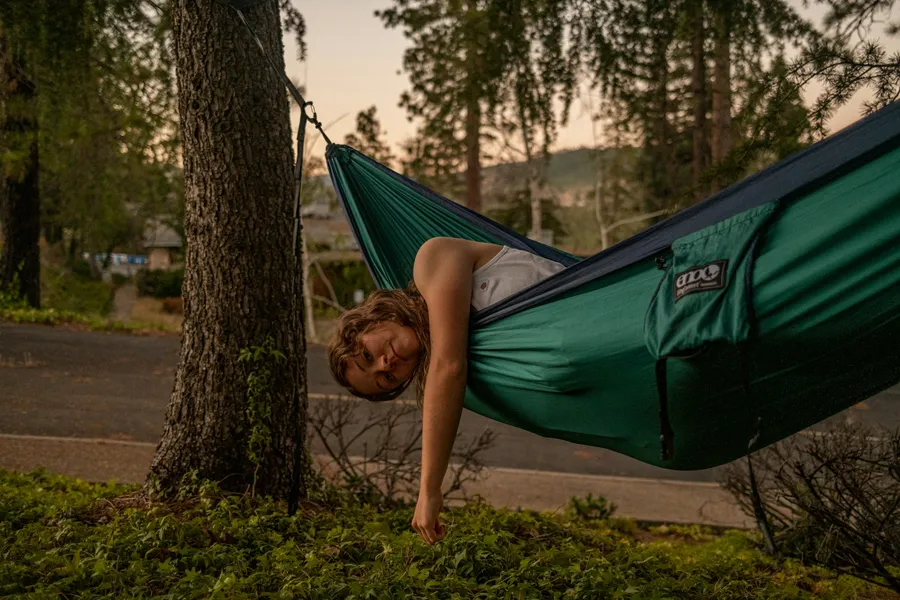
Never use rope on trees — it strips bark and most national parks will fine you. Tree-friendly straps with daisy-chain loops like ENO Atlas Straps ($30) or the lighter Sea to Summit Hammock Tree Protectors ($20) spread the load across a wide surface and adjust in seconds without knots. Look for straps rated to at least 200kg and at least 2.5 meters long to wrap around larger tropical trees. Hang your hammock with about 30 degrees of sag — too tight and the fabric presses your shoulders inward, too flat and your lower back loses support. For hammock camping, the rules vary enormously. Thailand and most of Southeast Asia are relaxed: string up on any beach or between jungle trees and nobody objects. In the US, designated campsite rules in national parks like Yosemite and Shenandoah now explicitly allow hammocks with tree-safe straps. In Europe, wild camping with hammocks is legal in Scandinavia under allemansratten (right to roam), tolerated in Scotland and the Balkans, but technically illegal in most of France, Italy, and Spain outside designated sites. Australia is mixed — permitted in Queensland national parks with a permit, restricted in New South Wales. Always check local regulations before your first night string-up.