Wandering a new city with your camera hoping for good shots is how you end up with 400 photos of nothing special. The photographers who consistently capture stunning travel images plan their walks the night before, using free tools to identify light direction, interesting neighborhoods, and backup indoor options for when weather turns.


The Night-Before Reconnaissance That Changes Everything
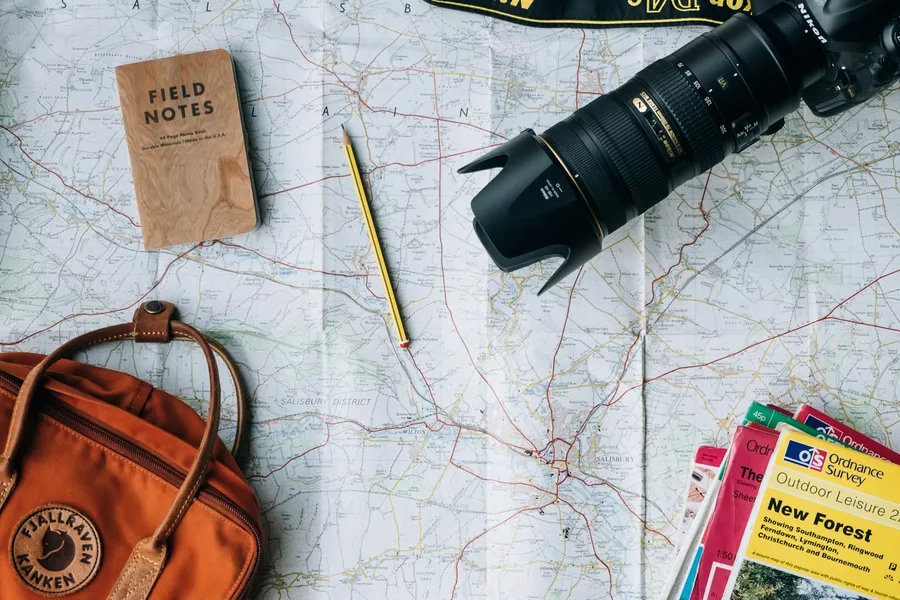
Open Google Maps satellite view and identify three distinct visual zones within a 3km walkable radius. In Lisbon, that might be Alfama's narrow tile-covered alleys, the geometric waterfront at Praca do Comercio, and the graffiti walls of LX Factory. In Hanoi, it's the French Quarter's colonial architecture, the chaos of the Old Quarter market streets, and the serenity of Truc Bach Lake at dawn. Plot your route to hit the most photogenic zone during golden hour (use the free app Sun Surveyor to check exact sunrise and sunset angles for your specific date and GPS location). The best street photography light in most cities is the first 90 minutes after sunrise when shadows are long and streets are empty. Plan to be at your primary location at sunrise, then walk toward your secondary zone as the light rises and hardens. By 10am, shift to covered markets, indoor spaces, or cafe shots where direct sunlight doesn't matter. This three-zone approach guarantees variety in your portfolio from a single morning.
Find a travel companion who matches your style and budget
Download Roammate — FreeCarrying Gear Without Killing Your Walk
The photographers who bring a full camera bag and tripod on a city walk shoot for 45 minutes before their shoulder hurts and they start skipping opportunities. Travel photography walks demand a minimal kit: one camera body, one versatile lens (a 24-70mm equivalent or, if you're on a mirrorless system, a prime 35mm that forces you to compose with your feet), and your phone as a backup wide-angle. Carry everything in a small sling bag like the Peak Design 6L that sits across your chest for instant access — not a backpack where the camera lives trapped under a zipper. Leave the tripod at home unless you're specifically shooting long exposures or night scenes. In cities like Tokyo's Shibuya, Istanbul's Grand Bazaar, or Marrakech's Jemaa el-Fnaa, the energy moves too fast for tripod photography anyway. The best travel photographers shoot handheld at 1/250s or faster, using slightly higher ISO (800-1600 on modern sensors looks perfectly clean) to freeze motion and capture the spontaneous moments that staged tripod shots can never replicate.