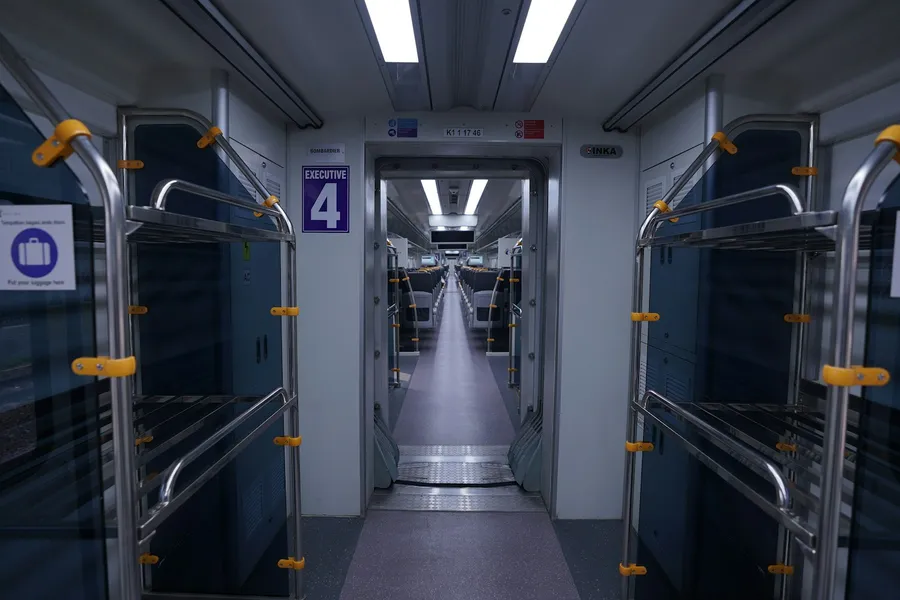
The 13-hour sleeper train from Bangkok to Chiang Mai leaves at 6pm and arrives at 7am. That's 4-5 usable hours of working time before sleep, plus you save a night's accommodation. European night trains between Vienna and Venice, Prague and Zurich, or Stockholm and Narvik offer similar windows. Overnight trains are the last truly productive transit option — but only if you set up correctly.


The Power and Connectivity Setup for Moving Trains
Thai Railways second-class sleeper cars have a single power outlet per berth — it's between the window and the fold-down bed, and passengers in upper berths can't reach it. Always book a lower berth. European night trains like the OBB Nightjet and Euronight services have outlets in both first and second-class compartments. Charge your laptop to 100% before boarding regardless, because outlets on trains occasionally don't work. Wifi on trains is unreliable everywhere except Japan's Shinkansen and some European high-speed routes, so download everything you need before departure: documents, reference materials, Spotify playlists, and any design assets or code repositories. Use your phone's hotspot for essential connectivity — most Southeast Asian SIM cards work fine on moving trains for messaging and light web browsing, though video calls are impractical due to inconsistent signal. The golden productivity window on most overnight trains is departure time until 10pm. After that, cabin lights dim, fellow passengers sleep, and the gentle rocking makes concentration difficult. Front-load your most demanding work into those first three hours.
Find a travel companion who matches your style and budget
Download Roammate — FreeComfort Engineering for Productive Hours
Train productivity fails not because of the train but because of physical discomfort. Solve this with three interventions. First, bring a lightweight cushion or folded hoodie for lumbar support — train seats and berths are flat, and four hours without back support leaves you stiff for the next day. Second, use noise-cancelling headphones playing brown noise or lo-fi beats rather than music with lyrics. Train sounds are rhythmic and can be soothing, but the unpredictable announcements, slamming doors, and conversations in adjacent compartments break concentration. Third, pack a small clip-on reading light if you're in a shared compartment — it lets you work after cabin lights go down without disturbing bunkmates. On the practical side, eat before boarding rather than relying on the dining car, which closes early and offers limited options. Bring a 1-liter water bottle, a protein bar, and a tangerine (the smell is pleasant in enclosed spaces, unlike most other foods). Set an alarm for 20 minutes before arrival to pack up calmly rather than scrambling when the train pulls in at 6:50am and everyone rushes for the door.