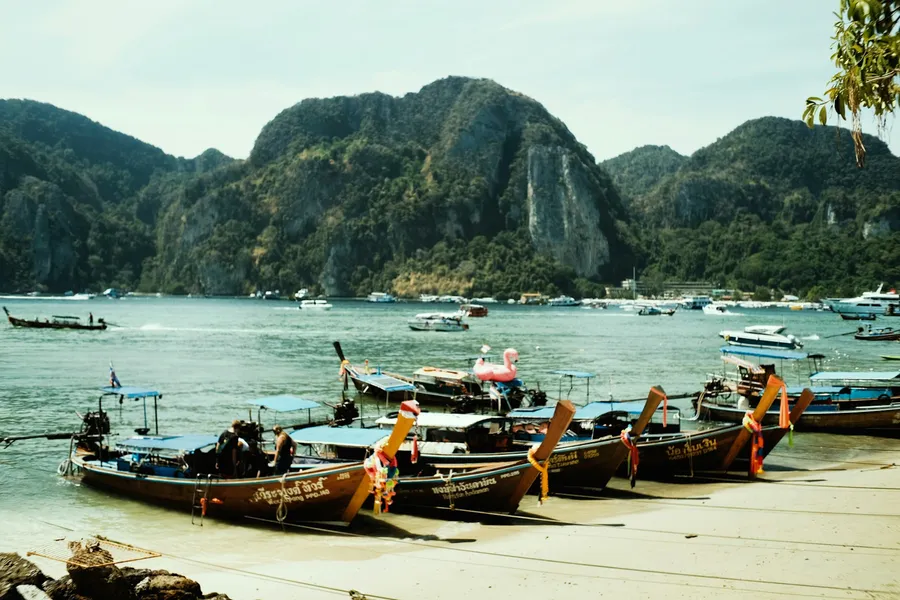
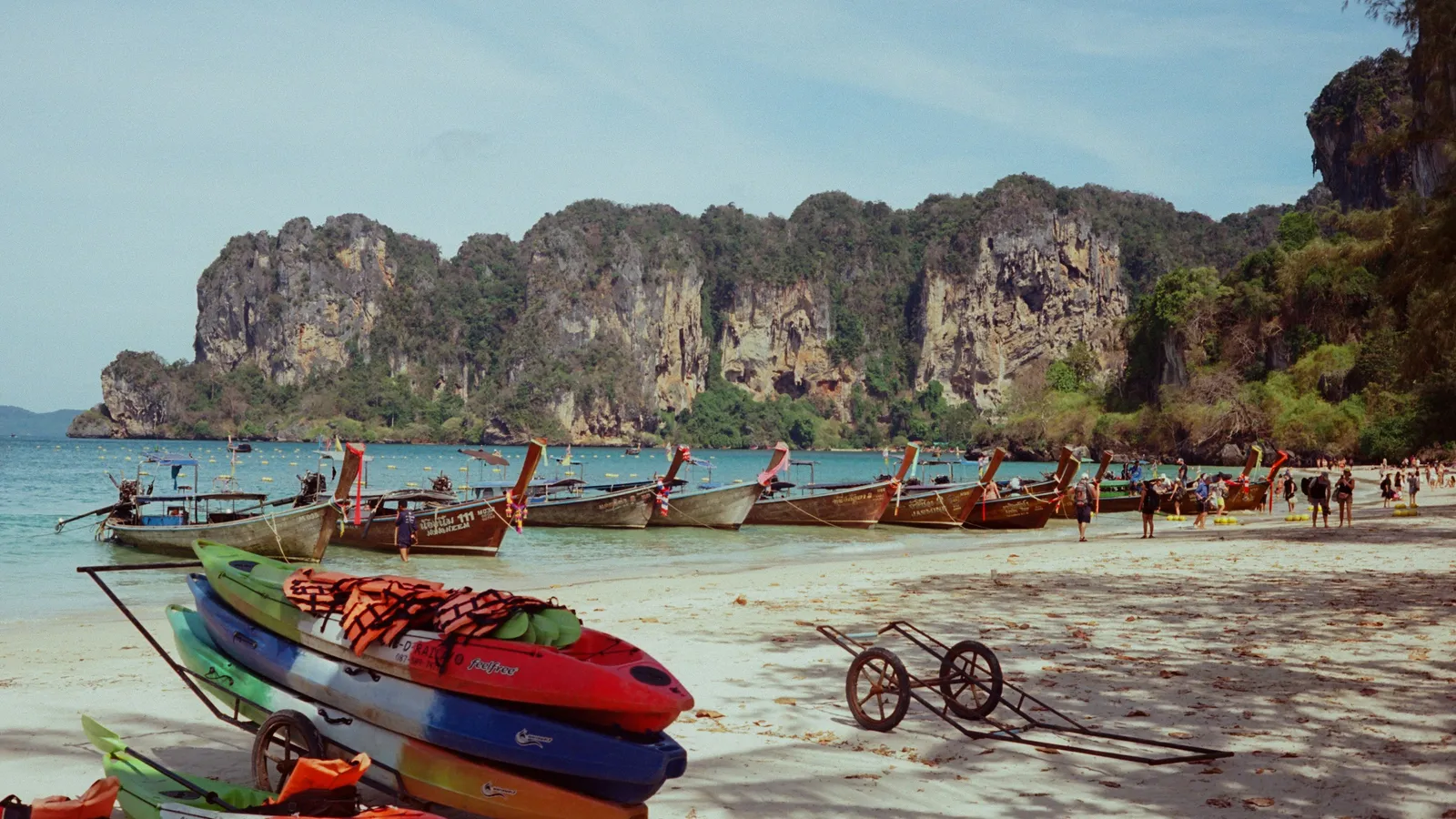
Southeast Asia is the easiest region in the world to find someone to travel with, which is exactly why choosing a tool for it is confusing. Every app claims the region, and most of them work somewhere in it. The useful question is not which app is best overall but which channel produces companions in the specific place you are standing, because what works in a Bangkok hostel does not work on a Palawan boat, and what works in Singapore does not exist in Pai. This compares the real options by city and by route.


Bangkok and Chiang Mai: the hostel is still the strongest network
In Thailand the highest-yield tool is still a hostel with a functioning common room. Khao San and Rambuttri run on volume and turnover: you will meet fifty people in three days and travel with none of them. The quieter Bangkok hostels around Phra Athit, Ari and Silom have longer average stays and produce more actual travel partners. In Chiang Mai, Old City hostels organise so many shared activities (Doi Suthep runs, cooking classes, the Sunday Walking Street) that pairing happens as a by-product of the calendar.
What apps add here is timing rather than reach. A hostel matches you with whoever is in the building tonight; an app matches you with someone whose route overlaps yours next week. Most people end up using both: the app to line up a companion for the next leg, the common room for tonight.
If you are only going to use one channel in Thailand, use the hostel. That stops being true the moment you leave it, which is the point of the rest of this post.

Find a travel companion who matches your style and budget
roammate: best for matching on budget and direction before you arrive
roammate matches travellers on travel style, daily budget bracket and destination overlap. It is free on iOS and Android, with no premium tier and no ads.
In Southeast Asia the budget bracket does most of the work. The gap between a 700-baht day and a 2,500-baht day in Thailand is not a difference in taste, it is two different trips: night buses versus flights, fan dorms versus private rooms, street stalls versus air-conditioned restaurants. Two people who match on destination but not on budget spend the whole leg negotiating meals.
Destination overlap matters more here than in Europe because the regional routes are so standardised. A large share of the people around you are doing Bangkok–Chiang Mai–Laos, or Bangkok–Siem Reap–Vietnam, or the Ho Chi Minh City to Hanoi run. Matching on direction and dates, not just on country, is what stops you meeting someone you get on with who happens to be going the other way.
One clarification, because it is the most common misunderstanding: roammate is companion matching, not accommodation. It will not find you a bed.
Facebook groups, Travello and Backpackr: best for volume, worst for filtering
Facebook groups are still the highest-volume option in the region: general backpacking groups, country groups, and a group for practically every island and route. Volume is a genuine strength. Post a plan for a specific ferry on a specific day and someone will answer within hours.
The weaknesses are equally real. There is no compatibility filter, your profile is your actual social media with everything that exposes, and posts surface by engagement rather than relevance. The Thailand and Vietnam groups in particular carry a heavy load of operators and rental scams working the comments.
Travello and Backpackr sit in between: travel-focused social feeds with a nearby-travellers function. They are useful for ambient discovery and for seeing who is in town, weaker for planning a specific leg with a specific person. Treat them as noticeboards, not matching engines.
If you do use Facebook groups, move the conversation to a direct channel early and read the person's post history before you agree to share a boat, a room or a budget with them.
Couchsurfing Hangouts, Meetup and Bumble BFF: best where there is critical mass
These three are city-dependent in a way people consistently underestimate. Singapore has the deepest bench: Meetup is genuinely active, Bumble BFF has real density, and the expat and nomad calendar runs all week. Bangkok is close behind. Manila and Ho Chi Minh City have working scenes but thinner ones, concentrated in a few districts. Outside the capitals (Pai, Kampot, El Nido) they are effectively empty, and you will spend an evening refreshing an app that has nobody in it.
Couchsurfing is a hospitality network first. Its Hangouts feature is useful for meeting people who are already where you are today, but it sits behind a paid membership, which thinned active users badly outside major Western cities. For finding a companion for next week's leg it is the wrong shape entirely.
The rule of thumb: in a city of several million with a resident foreign population, general-purpose social tools work well. On an island with four guesthouses they do not, and you are back to the common room and the boat.
The Philippines: the day boat is the matching mechanism
In the Philippines the thing that pairs people up is not an app, it is a banca. Island-hopping tours out of El Nido, Coron and Moalboal are sold per seat on a shared boat, and a full day on a small boat with the same eight people is a far better compatibility test than any profile. The same goes for the Coron wreck-dive day boats and the Cebu canyoneering trips.
The practical consequence: book the group day trip on your first or second day in a place, not your last. It is the cheapest social investment available in the country and it front-loads the matching.
Where apps earn their keep in the Philippines is the legs between islands rather than the days on them. Ferries and the small inter-island flights need booking, and having someone lined up before you arrive is what turns an expensive private transfer or a chartered boat into a split one. Line the person up in advance, then let the day boat do the vetting.

Vietnam and Bali: a corridor and a split scene
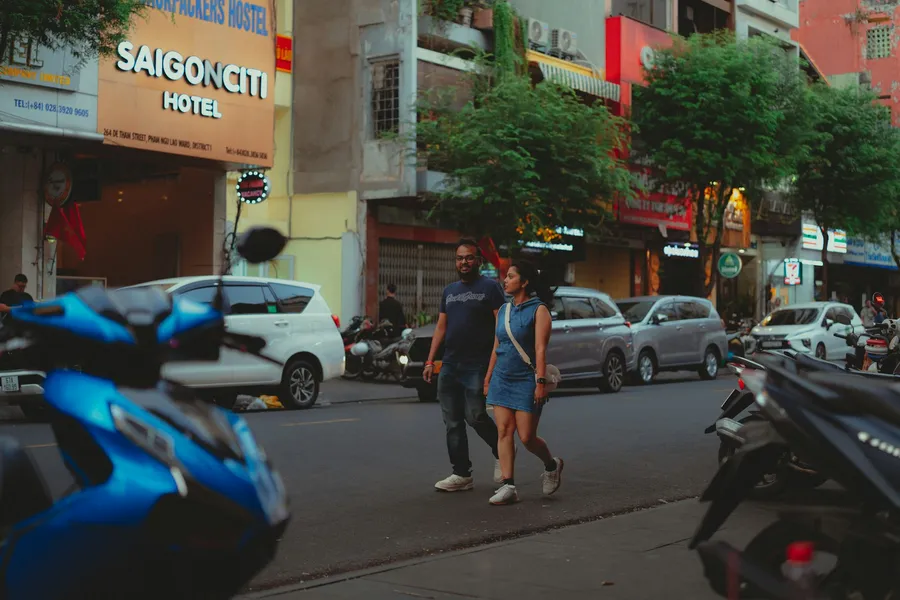
Vietnam is a corridor rather than a destination, and that makes companion-finding unusually easy. Almost everyone is moving north or south along the same spine (Ho Chi Minh City, Da Nang, Hoi An, Hue, Hanoi, then the Ha Giang loop) in one of two directions. Match on direction and approximate dates and you will keep re-meeting the same faces for three weeks. The sleeper buses and the loop hostels do the rest.
Bali is the opposite: two crowds that barely overlap. The backpacker scene runs through Kuta, the Gili crossing and the Nusa Penida day boats. The nomad and long-stay scene sits in Canggu and Ubud and organises itself around coworking spaces, gyms and month-long rentals rather than hostels.
The tools differ accordingly: companion apps and hostels for the first, coworking noticeboards and interest groups for the second. Say which of the two you are in your profile, because "Bali" on its own tells a potential companion almost nothing about what your day looks like.

Picking one: a short decision rule
Arriving in Bangkok or Chiang Mai with loose plans: book a social hostel and use a companion app only to line up the next leg. Doing the Vietnam run: match on direction and dates before you start, because the corridor keeps you together afterwards. Island-hopping in the Philippines: line the person up in advance, then let a shared day boat do the vetting. Based in Singapore, Bangkok or Canggu for a month or more: Meetup, coworking and interest groups will outperform any travel app, because you are not travelling, you are living somewhere.
Across all of them, do one cheap shared thing (a day trip, a temple run, a night bus) before you commit to a two-week leg together. Nothing you read in a profile survives contact with a twelve-hour bus.
For the mechanics once you are actually a group (splitting costs, making decisions, knowing when to separate), group travel coordination goes further than this post does.