Finding a trekking partner is a harder problem than finding a travel companion for a city trip, because the cost of getting it wrong is higher. A mismatched partner in Lisbon means a few awkward dinners. A mismatched partner nine days into the Annapurna Circuit means one of you walking at the wrong pace at altitude, or an argument about money at 4,000 metres, or a descent neither of you planned for. This is a comparison of the channels that actually produce partners (apps, clubs, noticeboards and paid group departures) and the checklist that decides whether the partner you found is one you should go with.


Companion-matching apps: best for lining someone up before you fly
The apps that exist for this are companion-matching platforms rather than trekking services. roammate, GAFFL, Travello, Tourlina (women only) and Backpackr all let you say where you are going and when, then show you people whose plans overlap. On a trek that overlap needs to be far tighter than it does for a city trip. "Nepal in October" is not a match. "Annapurna Circuit, 14 days, leaving Besisahar around 8 October, hiring a guide, no porter" is a match. Put the specifics in your profile and your first message, because the filter that matters is not the app's but yours.
Identity badges and traveller reviews are not a trekking-fitness assessment. Discuss whether a potential partner can walk 18 kilometres a day at altitude with a 12 kg pack, and assess your own readiness too. Finding someone interested in your route and dates is only a starting point, not a substitute for qualified guidance or suitable travel insurance.
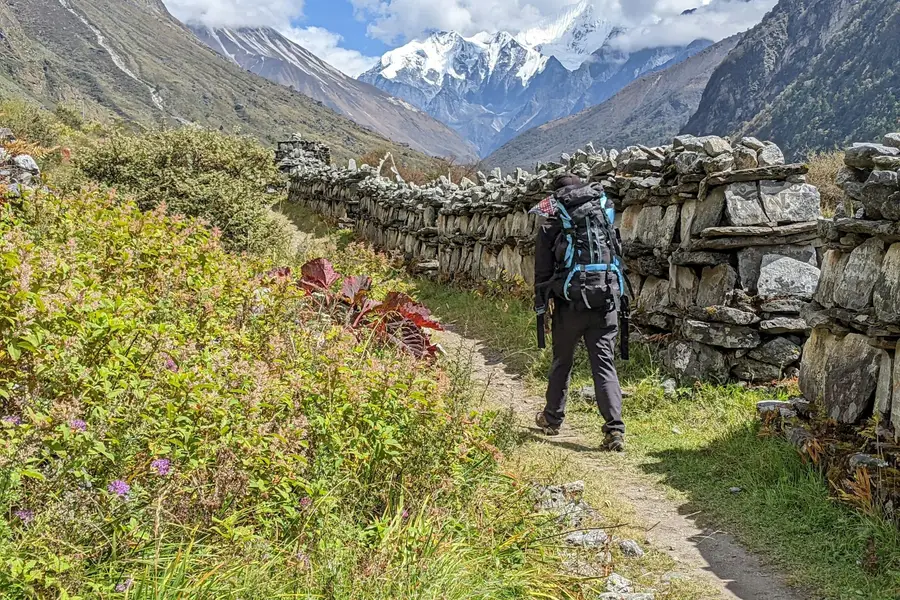
Find a travel companion who matches your style and budget
roammate: best for matching on pace, budget and dates before you commit
roammate matches travellers on three things: travel style, daily budget bracket and destination overlap. It is free on iOS and Android, with no premium tier and no ads.
The budget bracket is the dimension that earns its keep on a trek. Guide and porter fees, permits, teahouse rooms, hot showers and the price of a bottle of water at 4,000 metres are the largest variable in the whole trip, and two people who quietly assumed different numbers will discover it on day four rather than at the planning stage. Sorting that during matching, rather than in a lodge in Manang, is the point.
You can also nominate emergency contacts in the app and raise an alert from it. That matters more on a trail than it does in a city, and it is worth setting up with your partner before you start walking rather than after.
Where roammate is the wrong tool: it is companion matching, not accommodation and not a trekking company. If you want a fixed itinerary, a leader carrying a radio and an organisation that owns the evacuation problem, book an operator instead (see below). roammate finds you a person; it does not run your trek.

Hiking clubs and meetup groups: best for partners you can walk with first
Local hillwalking and mountaineering clubs, university clubs, national alpine club sections and Meetup groups solve a problem no app can: repeated, low-stakes contact before any money changes hands. You get to watch how someone behaves at hour six in horizontal rain: whether they wait at junctions, whether they eat and drink on a schedule, whether they say "I'm cooked" out loud or push on silently until something goes wrong. That is worth more than any profile.
Clubs also run skills courses in navigation, winter travel and rope work, which quietly widens the pool of people qualified to join you on something serious.
The limitation is geography and calendar. A club in your home city cannot produce someone free for a three-week window in Nepal starting on a particular Tuesday. Use clubs to build a standing list of people you would genuinely trek with, then check that list first whenever a trip firms up. Route-specific Facebook groups (there is usually one for every major trail) sit between the two: destination-specific like an app, but with a visible post history you can read before you message.
Trailhead noticeboards and teahouse logbooks: best for last-minute pairing
In Kathmandu's Thamel, on the Pokhara lakeside, and in Cusco, Huaraz and El Chaltén, guesthouse noticeboards and trekking-agency windows still carry partner-wanted cards, and they still work. Permit and registration offices are the other reliable spot: everyone queueing for the same permit on the same morning is, by definition, on your route. Once you are walking, teahouse and hut logbooks tell you who is a day ahead of you and moving at what pace.
Write the card properly. Route, exact dates, the daily distance you expect to cover, whether you are hiring a guide or a porter, your rough daily budget and a way to reach you. Vague cards attract mismatched people and waste both of your afternoons.
This channel is the fastest of the lot and the least filtered, so it works best when your dates are already fixed and you are genuinely willing to walk away after a trial day. Build a spare day or two into Kathmandu or Pokhara at the start and the noticeboards become a real option rather than a gamble.
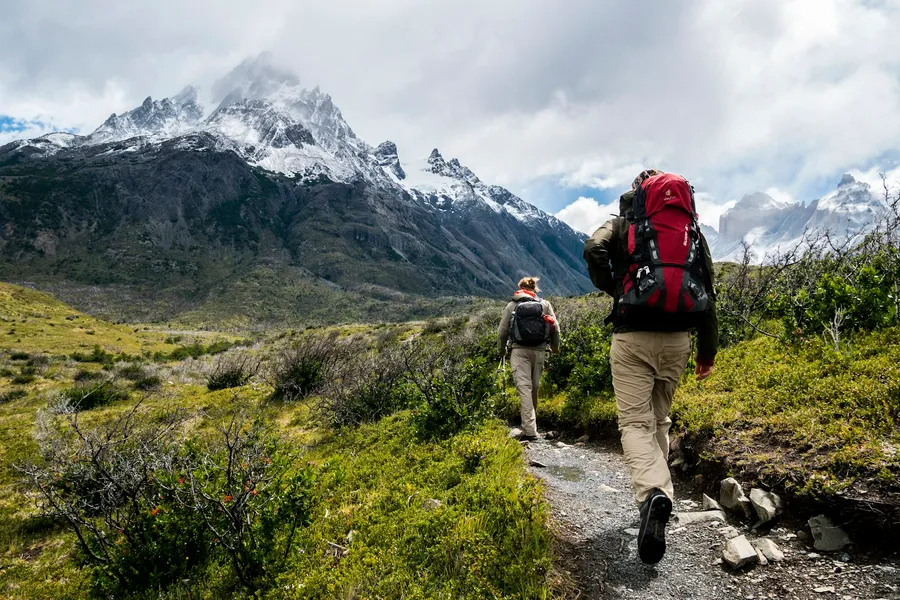
Organised group departures: best if you would rather pay to skip the problem
Paying to skip the matching problem is a legitimate answer, and for a lot of people it is the right one. A scheduled group departure bundles the partner problem with permits, transport, accommodation and a leader whose job is to manage an emergency. That last part is the one that actually matters. You do not choose your companions; you get whoever booked the same date, plus someone paid to keep the group functioning.
The trade-offs are real: fixed pace, fixed dates, and a cost several times what the same route costs independently. If you are a strong walker who wants to move fast, a group departure will frustrate you.
It is the obvious choice where a guide is compulsory or close to it. Kilimanjaro cannot be climbed without a licensed operator. The classic Inca Trail to Machu Picchu is permit-controlled and operator-only. Nepal has tightened its rules on trekking without a licensed guide in national park areas in recent years. Check the current requirement with the permit authority before you plan around going unguided on Everest Base Camp or the Annapurna Circuit.
The pre-commitment checklist: settle these five before anyone books
Daily distance and pace. Agree the hours you will walk each day, and agree that the slower person sets the pace. Two people with identical fitness and different ambitions still fall out; two people with different fitness and an agreed pace usually do not.
How guide, porter and permit costs split. Settle it before anyone books: straight down the middle, or per-person where the cost is per-person and shared where it is shared. Write it down. The argument is never really about the money, it is about the assumption nobody stated.
The turnaround rule. Pick a time of day, an altitude or a weather condition that means you both go down, and agree it while you are warm, fed and at sea level. A turnaround rule is only useful if it was set before either of you was invested in the summit.
What happens if one of you has to descend. Illness, altitude, a rolled ankle. Decide now whether the other continues, whether you both go down, and who carries which piece of shared kit. If your answer is "we both go down", say it out loud. Plenty of people assume it and are surprised.
Insurance, documents and contacts. You both need cover that includes your actual maximum altitude and helicopter evacuation, and each of you should hold the other's policy number, next of kin and a passport copy. Nominate each other as emergency contacts in whatever app you are using.
The trial day walk: the cheapest test you will ever run
Do one full day together before either of you books a flight or a permit. Not a coffee and not a video call: a proper day with loaded packs, some ascent, and ideally weather that is a bit unpleasant. A day walk surfaces almost everything a three-week trek will surface, at a tiny fraction of the cost of finding out on day nine.
Watch the practical things rather than the personality. Whether they eat and drink on a schedule or forget. Whether they stop when they say they will stop. Whether they wait at junctions. Whether their kit is the kit they said they had. Notice especially how they handle being slower than you, or faster.
If you are already in-country this is easy: a day hike out of Pokhara, or the Tongariro crossing if you are pairing up in New Zealand, will tell you what you need to know. If you are matching from home, use a club day out or a local hill. And treat a refusal as information. Someone who will not give you one day before a three-week commitment has answered the question.